
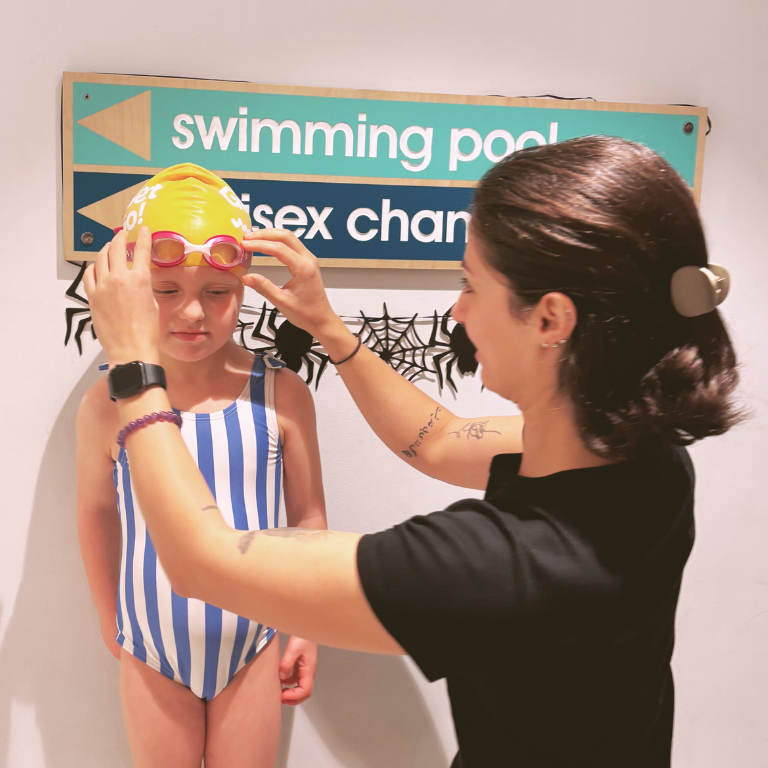
For families who rely on a nanny, au pair, or childminder as part of their childcare arrangement, it is completely natural to ask whether swimming is an activity a carer should manage.
Swimming is great fun for children, but it is also one of the most important life skills they can learn. It supports physical development, coordination, confidence, and independence, while playing a vital role in water safety. At the same time, water changes the dynamic of any activity. What might feel like a relaxed outing still requires constant supervision, calm judgement, and a confident adult presence.
Parents want reassurance that their child will be safe, supported, and comfortable in the water, even when they are not present themselves. Our members frequently ask our view on whether caregivers should take children swimming. The honest answer is that it depends on several factors, not just swimming ability. To explore this question properly, we spoke with Fox & Cubs Nanny Private Staff Agency, a specialist childcare and private staffing agency, to help bridge the gap between what happens in and around the pool and the realities of everyday family life when an extra pair of hands is involved.

So, should a nanny, au pair, or childminder take your child swimming?
In the right circumstances, yes.
Swimming with a carer can work very well. Children often feel more relaxed with a familiar adult, and when it is approached thoughtfully, swimming can become a positive, confidence-building experience rather than a stressful one.
What matters most is not whether the adult is a parent or a carer, but whether they feel genuinely confident around water and understand how much attention swimming requires.
As Fox & Cubs explain: “Swimming is different from most activities. Carers need to feel comfortable around water and understand that supervision has to be constant – even when things feel relaxed.”
Confidence around water
Before a nanny, au pair, or childminder heads to the pool, it is worth discussing how confident they feel around water. This goes beyond whether they can swim themselves. It includes whether they feel comfortable entering the water if needed, staying close to a child, and remaining calm if a situation changes unexpectedly.
From Fox & Cubs’ experience, carers who feel at ease in water-based environments are better able to offer reassurance and respond calmly. This confidence transfers directly to the child, helping them feel safe and supported.
Understanding supervision and the pool environment
Swimming requires a different level of attention compared to many other activities. Carers need to understand when to stay within arm’s reach, when a child can safely explore more independently, and how quickly circumstances can change in busy pool environments.
It is also important that carers feel familiar with the pool itself. Knowing the rules, understanding where lifeguards are positioned, and being aware of safe entry and exit points all contribute to a safer experience.
As Fox & Cubs note: “When carers understand a child’s individual needs and know what is expected of them, swimming becomes safer and far more enjoyable for everyone.”
What matters most from your child's point of view
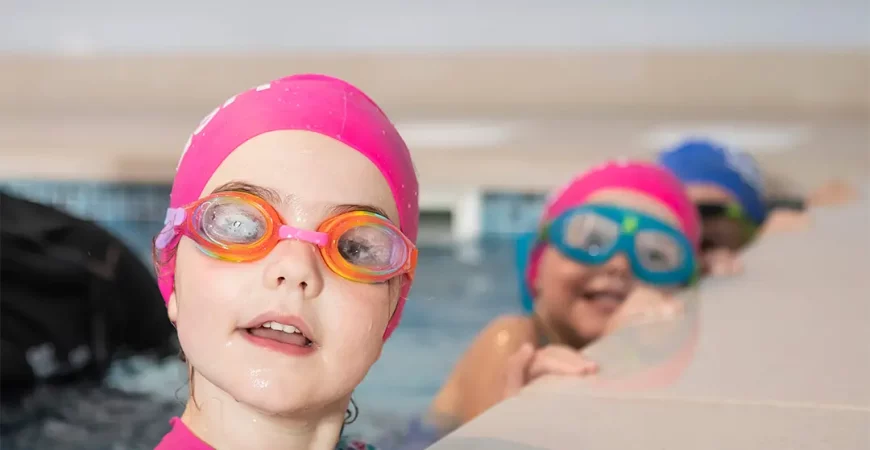
For children, swimming should feel safe, familiar, and fun. Younger children and beginners often need closer supervision and reassurance, particularly if they are swimming without a parent for the first time.
Familiar routines can make a significant difference. Arriving with a trusted adult, following the same changing routine, or even bringing a familiar toy can help younger children feel more at ease.
Even confident swimmers can feel overwhelmed in busy public pools. Noise, crowds, and new surroundings can all impact how a child feels in the water. Gentle encouragement, rather than pressure, allows confidence to develop naturally.
At GetSetSwim, we consistently see children make the most progress when they feel supported and unpressured. Confidence grows fastest when children feel safe and understood.

Making swimming work in everyday family life
Swimming is most successful when parents and carers communicate clearly and plan ahead. A shared understanding of expectations helps ensure the experience is positive for everyone involved.
Practical tips for carers
Carers should stay within arm’s reach of younger children and keep their eyes on them at all times. Knowing where lifeguards are positioned and what to do in an emergency is essential.
Encouraging play and exploration helps children relax, but carers should always be ready to step in quickly if needed. Sharing a brief update with parents afterwards, including what went well and what felt challenging, helps maintain trust and continuity.
Practical tips for parents
Parents can support carers by clearly communicating expectations before swimming takes place. This includes sharing information about a child’s swimming ability, routines, preferences, or any concerns.
Choosing pools that suit a child’s age and ability, ideally familiar and close to home, can also help swimming fit more smoothly into busy family schedules.
Free swimming alongside structured lessons
Free swimming with a trusted adult can be a wonderful way to reinforce water confidence, strengthen bonds, and enjoy time together. However, it works best alongside structured lessons with qualified instructors, particularly in the early years.
At GetSetSwim, lessons take place in warm, purpose-built pools and focus on technique, confidence, and safety. Water Safety Weeks use playful challenges to help children practise essential skills, giving them confidence they can carry into any swimming environment.
Structured lessons and relaxed swimming sessions complement each other, helping children feel capable and secure both in lessons and in everyday swimming situations.
To sum up
A nanny, au pair, or childminder can absolutely take a child swimming, provided the adult feels confident, supervision is active, and the child feels safe and supported. With open communication, realistic expectations, and the right environment, swimming can become a positive and enriching part of a child’s routine.
As Fox & Cubs put it: “A bit of preparation and open communication makes a huge difference. When everyone knows what is expected, swimming can be a really fun and positive experience for children and their caregiver.”
Fox & Cubs Nanny Private Staff Agency has been supporting families in London and internationally since 2012 with the placement of experienced nannies, maternity nurses, and household staff. Led by Fanny Di Domenicantonio, a London-based mother of three and childcare industry expert, Fox & Cubs is known for its discreet service, rigorous vetting standards, and bespoke approach. Head to their website or contact the team on 020 3838 2588 to learn how they can support your family’s needs.