

Starting swimming lessons can feel like a big step — for both children and parents. In this guide, our South Kensington teacher Victoria shares how parents can prepare a child for their first swimming lesson, from building confidence at home to knowing what to expect in those early weeks.
The first swimming lesson isn’t about perfect technique, or whether your child goes underwater straight away.
It’s about something much simpler: helping them feel comfortable in the pool, and safe with their new teacher.
That confidence doesn’t always happen instantly. For some children, it takes a few lessons to settle in, build trust and feel at ease. And that’s completely normal.
Sometimes the hesitation isn’t even about the water itself. It can be the unfamiliar environment, a new adult, or simply being somewhere different from what they know.
Start even before you arrive
One of the best ways to prepare your child is to start at home.
Simple things like gentle bath time routines, pouring water over shoulders, or singing familiar songs can make water feel positive and predictable. These small moments help children associate water with calm, rather than uncertainty.
Children are also incredibly perceptive. They pick up on how we feel.
If you feel calm and confident, they’re more likely to feel the same.
Your role matters - especially in the early lessons
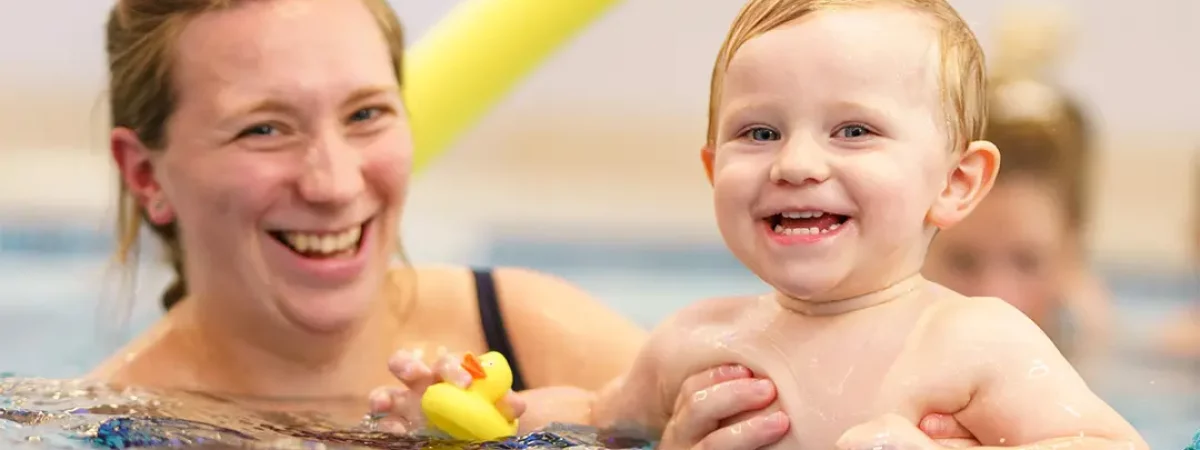
For babies and toddlers, being in the water with them makes a real difference.
It’s a chance to share the experience together — to reassure them, support them, and gently introduce them to their teacher without any pressure.
It’s also one of those rare, uninterrupted moments of connection in the week. Something many parents end up looking forward to just as much as their child.
Take your time. If your child needs a moment to watch, to hold on, or to settle, that’s okay. There’s no rush.
Set expectations... and then let them go!
It’s easy to arrive at that first lesson hoping for big moments — splashes, smiles, maybe even a few impressive skills.
But swimming isn’t a race.
Some children jump straight in. Others take a little longer. Both are completely normal.
Progress might look like:
- sitting calmly on the poolside
- putting feet in the water
- letting go for a few seconds
These small steps matter more than anything else at the beginning.
And yes: sometimes children cry. Just like the first day at nursery, it’s part of adjusting to something new. With the right support, that uncertainty almost always fades.
Practical tips that help
A little preparation goes a long way:
- Arrive early so you’re not rushing
- Let your child watch a lesson beforehand if possible
- Bring something familiar, like a favourite bath toy
- Avoid feeding right before class
- Make sure you have the right swimwear (especially for babies)
These details help the whole experience feel calmer and more manageable — for both of you.
Trust the process
As teachers, we’ve seen every reaction you can imagine — excitement, hesitation, tears, and everything in between.
Children settle at their own pace. Some connect with their teacher straight away, others take a few sessions. Both are part of the process.
The most important thing is consistency and trust — in your child, and in the person guiding them.
Because over time, what starts as uncertainty becomes familiarity. And familiarity becomes confidence.