
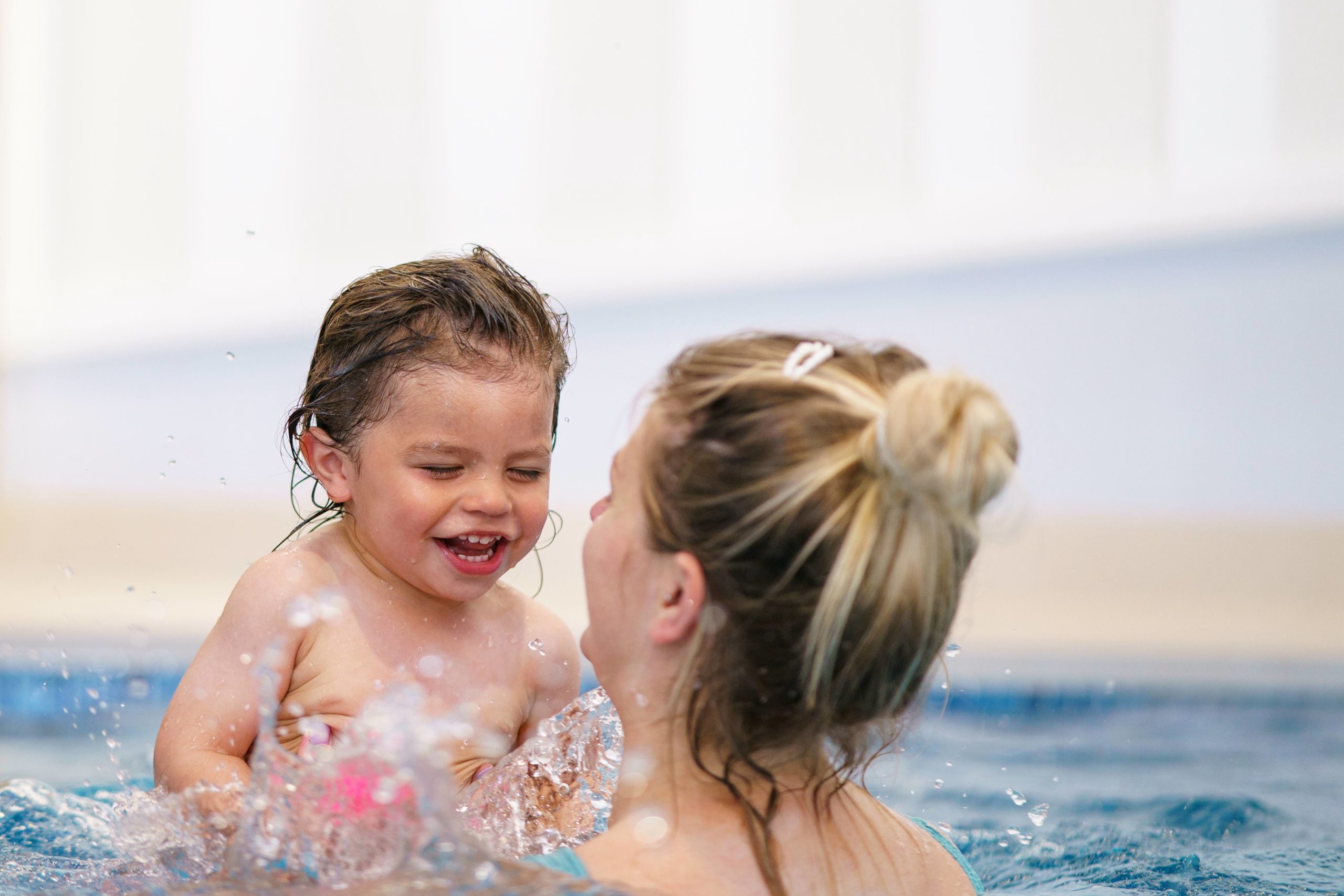
There’s a big difference between a child who can swim and a child who feels confident around water.
Before technique, before badges, before independent lengths, there’s trust. Trust in the environment. Trust in their teacher. Trust in their own body.
And that starts long before the first formal lesson.
If your child is about to begin swimming, it’s completely normal to wonder how they’ll react. Some children run straight in. Others grip tightly and take their time. Both are fine. Confidence in water isn’t personality-led — it’s experience-led.
Confidence starts with familiarity
The goal before lessons isn’t performance. It’s comfort.
Bath time counts. Pouring water gently over shoulders. Blowing bubbles. Letting them control the splash instead of it surprising them.
Small, repeated, positive exposures build familiarity. And familiarity builds calm.
If your child doesn’t like water on their face, that’s information – not a problem. Go slowly. Make it playful. Avoid turning it into a test they can “fail.” When children feel in control, resistance softens naturally.
Your calm becomes their calm
Children read us more than they listen to us.
If we treat swimming like a milestone that must be conquered, they’ll feel the pressure. If we treat it as something steady and learnable, they absorb that too.
Instead of “Don’t be scared,” try, “Your teacher will help you step by step.”
Instead of “You have to jump in,” try, “Let’s see what feels comfortable today.”
Confidence doesn’t grow from being pushed past fear. It grows from feeling supported through it.
Choose the right space
Pools can be overwhelming: bright lights, echoing noise, cold changing rooms, crowded lanes. For a child who is still building confidence, those factors matter.
Warm water. Small groups. Consistent teachers. Calm, clean spaces. These aren’t luxuries; they’re foundations.
When children feel physically comfortable, they’re far more open to learning.
This is exactly why our children’s swimming lessons are structured the way they are. Progress matters, but emotional readiness matters first. We’d much rather a child leave feeling proud of one small achievement than overwhelmed by three big ones.
Confidence builds from experience
Real confidence grows from trying things for themselves, not just talking about it.
The first time they put their ears under.
The first time they let go for three seconds.
The first time they try again after wobbling.
These moments are quiet, but powerful, showing your child, “I can feel unsure and still do it.” And that lesson travels well beyond the pool.
And if you're feeling nervous too (as a parent)
It’s worth saying, many adults carry their own water wobbles. Memories of cold pools, rushed lessons or feeling left behind.
Children pick up on that, but they also pick up on reassurance.
If the first experiences around water are warm, contained and positive, children rarely develop the fear we’re often trying to prevent.
And if they do start cautiously? That’s not a setback. Some of the strongest swimmers begin as the most tentative. They simply build their confidence layer by layer.
Helping a child feel confident around water isn’t about removing nerves completely. It’s about showing them that nerves are manageable — and that they won’t face them alone.
When that foundation is in place, swimming lessons stop feeling like something to get through – and become something to grow through.